
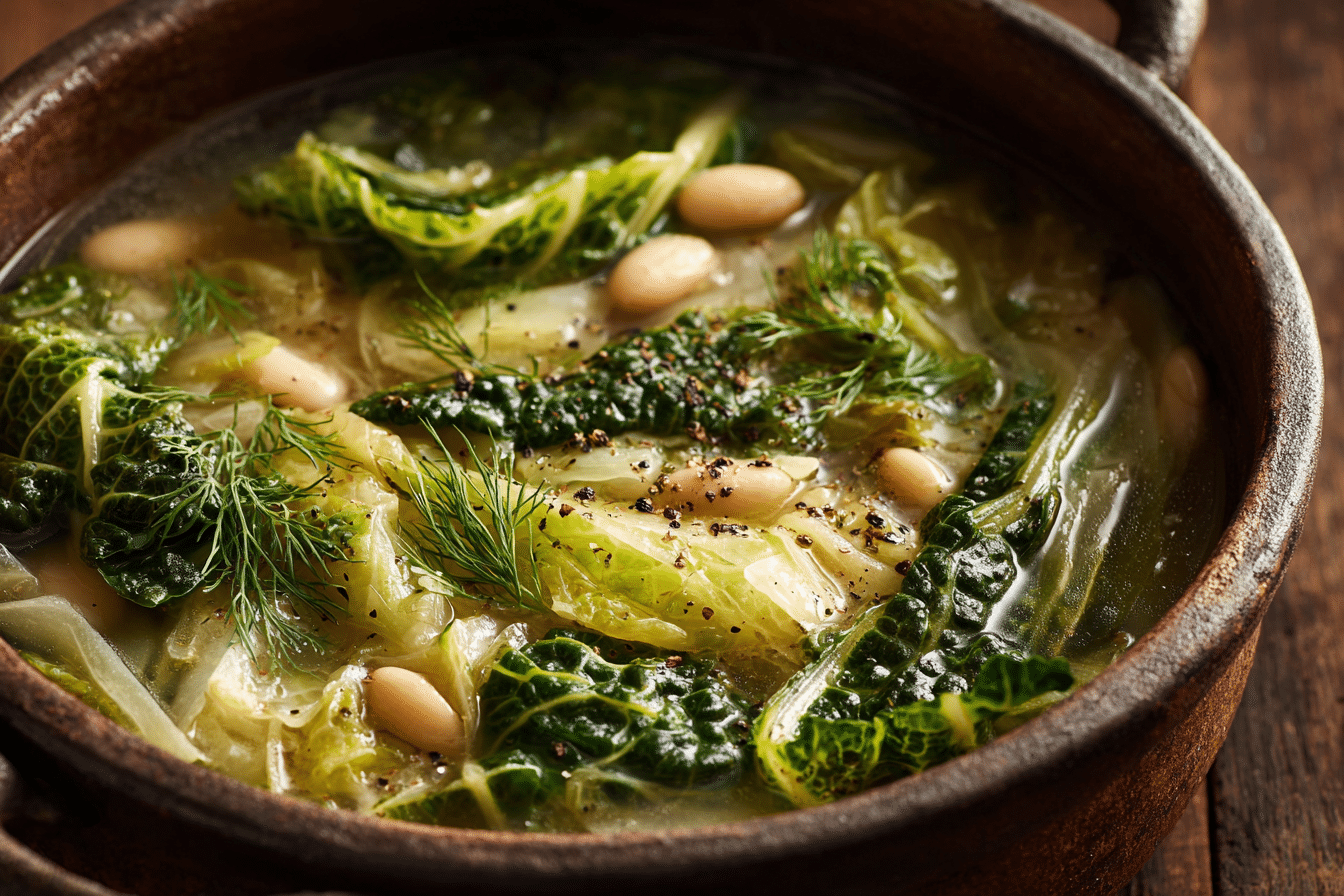
Healing Garlicky Cabbage Soup is a soothing, nutrient-packed dish that delivers comfort in every spoonful. Simmered with garlic, onions, carrots, and tender cabbage, this soup is naturally low in calories but high in flavor — a perfect recipe when you’re feeling under the weather, recovering from indulgence, or simply craving something warm and revitalizing.
Garlic is the star of the show, known for its anti-inflammatory and immune-supportive properties. Combined with cabbage — a cruciferous vegetable loaded with fiber and antioxidants — this simple soup becomes a powerhouse of wellness. It’s budget-friendly, deeply hydrating, and ready in under 45 minutes.
Whether you’re nursing a cold, easing digestion, or doing a light reset, this garlicky cabbage soup will leave you feeling nourished and grounded.
Ingredients Overview
Each ingredient in this soup was chosen for its healing potential, flavor depth, and accessibility. Here’s what you’ll need, along with smart swaps and optional boosts.
Green Cabbage
Cabbage is hydrating, detoxifying, and fiber-rich. Its mild sweetness shines when simmered until soft and tender.
-
Use green cabbage for a classic version
-
Red cabbage works too, but will change the soup’s color and flavor slightly
Prep Tip: Core and slice the cabbage thinly so it cooks evenly.
Fresh Garlic
The immune-boosting superstar. You’ll use 6–8 cloves, finely minced or thinly sliced. The generous amount creates a deeply savory, almost buttery base without being overpowering.
Pro Tip: Let minced garlic rest for 5–10 minutes before cooking to activate its allicin content for maximum benefits.
Onion
Onions add sweetness and depth, especially when sautéed until translucent. Use yellow or white onions.
Optional: Add leeks or shallots for extra complexity.
Carrots and Celery
These classic soup vegetables bring subtle sweetness and texture. They’re also anti-inflammatory and easy on digestion.
Vegetable Broth or Bone Broth
-
Use low-sodium vegetable broth for a clean, vegan version
-
Choose chicken or bone broth for added protein and gut-healing collagen
Homemade broth will take this soup to the next level.
Olive Oil
Used to sauté the aromatics, olive oil adds healthy fat and enhances flavor absorption.
Alternative: Use avocado oil or ghee if preferred.
Herbs and Seasoning
-
Bay leaves and thyme lend an earthy aroma
-
Black pepper for warmth
-
Sea salt to taste
-
Parsley or dill as fresh finishers
Optional Add-Ins
-
A pinch of red pepper flakes for gentle heat
-
Fresh ginger for extra immune support
-
Lemon juice for brightness
-
White beans for added protein and fiber
Step-by-Step Instructions
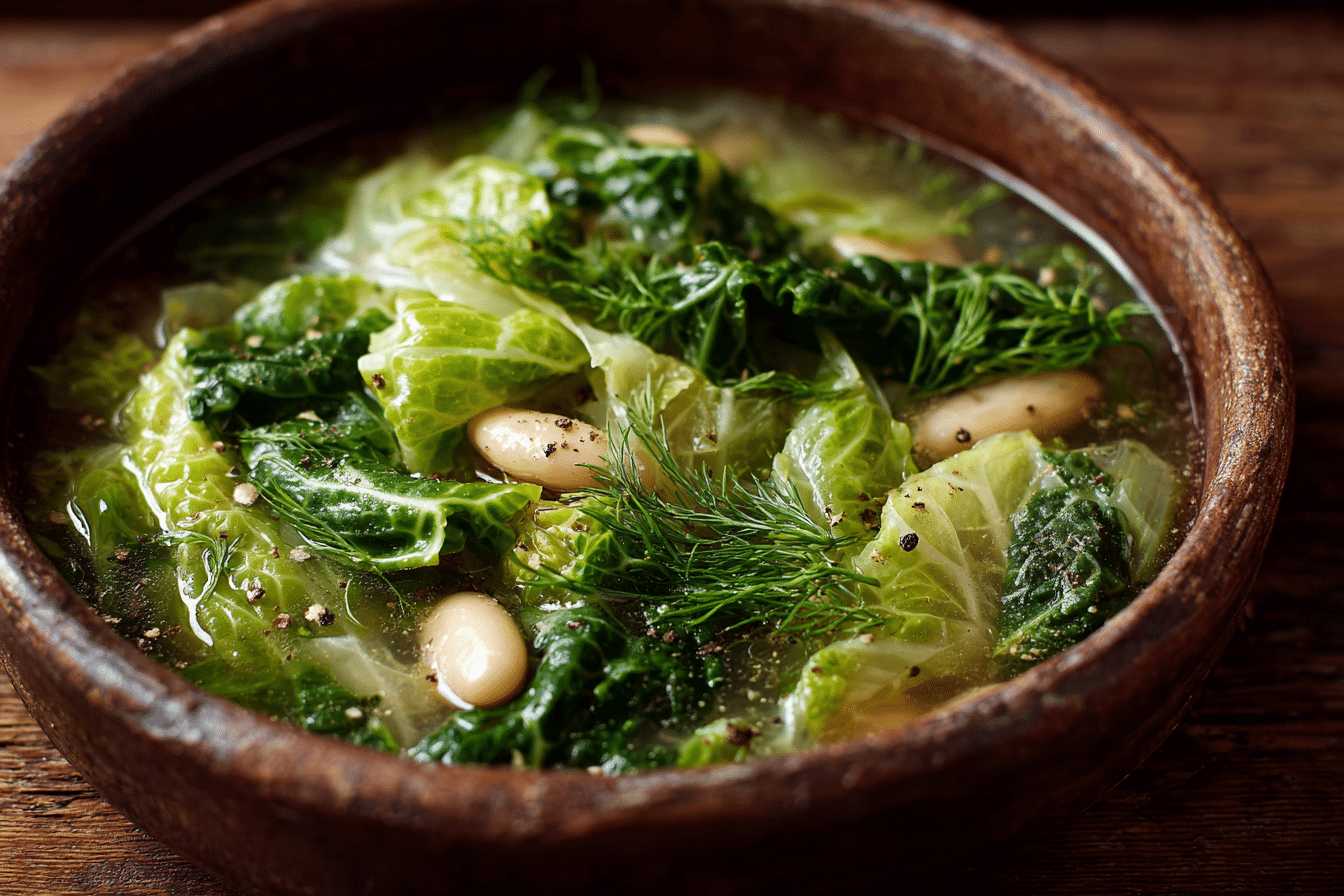
1. Prep Your Vegetables
-
Dice 1 large onion
-
Slice 2–3 carrots and 2 celery stalks
-
Thinly slice or shred half of a medium green cabbage (about 5–6 cups)
-
Mince 6–8 garlic cloves
2. Sauté Aromatics
-
In a large pot or Dutch oven, heat 1 tablespoon olive oil over medium heat.
-
Add onion, carrots, and celery. Sauté for 5–7 minutes until softened.
-
Stir in garlic and cook for 1 minute more, until fragrant.
Tip: Avoid browning the garlic — it should stay soft and aromatic.
3. Add Cabbage and Broth
-
Add shredded cabbage to the pot and stir to combine.
-
Pour in 6–8 cups vegetable or chicken broth, enough to cover the vegetables.
-
Add:
-
2 bay leaves
-
½ teaspoon dried thyme
-
Salt and black pepper to taste
-
Bring to a simmer.
4. Simmer Until Tender
-
Cover and simmer for 20–25 minutes, until the cabbage is soft and the broth is flavorful.
-
Taste and adjust seasoning. Add more salt or pepper if needed.
Optional: Add lemon juice or fresh herbs at the end for brightness.
5. Serve and Heal
Ladle the soup into bowls and garnish with:
-
Fresh parsley or dill
-
A drizzle of olive oil
-
Crushed red pepper (optional)
Serve hot with:
-
Warm crusty bread
-
A soft-boiled egg on top
-
Steamed rice or quinoa for added heartiness
Tips, Variations & Substitutions
Boost the Benefits
-
Add turmeric for anti-inflammatory support (½ tsp stirred in with the garlic)
-
Stir in chopped kale or spinach in the final minutes for extra greens
-
Ginger-Garlic version: Sauté 1 tbsp grated ginger with the garlic for a warming twist
Customize the Texture
-
Chunky soup: Leave veggies whole and rustic
-
Smoother version: Use an immersion blender to partially puree the soup
-
Brothier version: Add extra broth or water for a more hydrating soup
Protein Add-Ins
-
White beans or lentils
-
Diced rotisserie chicken
-
Cooked quinoa or brown rice stirred in at the end
Storage & Meal Prep
-
Fridge: Store in airtight containers for up to 5 days
-
Freezer: Freeze in batches for up to 3 months — thaw and reheat as needed
Serving Ideas & Occasions
Healing Garlicky Cabbage Soup is ideal for:
-
Cold and flu season – it’s gentle on the stomach and full of immune-supportive ingredients
-
After indulgent meals – helps reset digestion and reduce bloat
-
Meal prep lunches – easy to batch and reheat
-
Light dinners – serve with a grain or salad for a full plate
Pair with:
-
Whole grain toast with hummus or avocado
-
Steamed brown rice
-
Herbal tea or lemon water
It’s comforting, nourishing, and always hits the spot when you want something soothing.
Nutritional & Health Notes
This soup is:
-
Low in calories (~100–130 per serving)
-
High in fiber and hydrating
-
Gluten-free and easily vegan
-
Anti-inflammatory and immune-friendly
Garlic, cabbage, and broth make this soup a trifecta of healing ingredients. It’s perfect for gut support, gentle detoxing, or simply fueling your body with clean, whole foods.
FAQs
Q1: Can I make this soup in a slow cooker?
Yes. Add all ingredients to the slow cooker and cook on low for 6–7 hours or high for 3–4 hours. Add fresh herbs at the end.
Q2: Is this soup good for digestion?
Absolutely. Cabbage supports gut health with fiber and hydration, while garlic and broth help reduce inflammation.
Q3: Can I freeze this soup?
Yes. Let it cool completely, portion into containers, and freeze for up to 3 months. Reheat gently on the stovetop.
Q4: What type of cabbage is best?
Green cabbage is ideal. You can also use Napa cabbage or a mix of red and green for color and texture variation.
Q5: Can I make this soup spicy?
Yes. Add crushed red pepper flakes, fresh ginger, or a dash of cayenne to increase the warmth and kick.
Q6: How do I make it more filling?
Add protein like white beans, chicken, or lentils. Stir in a cooked grain such as quinoa or farro for heartiness.
Q7: Is this recipe low-carb or keto-friendly?
It’s low in net carbs, especially if you skip carrots. For strict keto, monitor the carb content of added ingredients like onion and broth.
PrintHealing Garlicky Cabbage Soup – Nourishing, Light, and Immune-Boosting
Healing garlicky cabbage soup is a light, nourishing dish filled with immune-supportive garlic, tender cabbage, and wholesome vegetables simmered in a savory broth.
Ingredients
-
1 tbsp olive oil
-
1 onion, diced
-
2–3 carrots, sliced
-
2 celery stalks, sliced
-
6–8 garlic cloves, minced
-
½ head green cabbage, thinly sliced (5–6 cups)
-
6–8 cups vegetable or chicken broth
-
2 bay leaves
-
½ tsp dried thyme
-
Salt and pepper, to taste
-
Optional: lemon juice, parsley, red pepper flakes
Instructions
-
Heat olive oil in a large pot over medium heat. Add onion, carrots, and celery. Sauté 5–7 minutes.
-
Add garlic and cook 1 more minute, stirring frequently.
-
Stir in cabbage, broth, bay leaves, thyme, salt, and pepper.
-
Bring to a simmer. Cover and cook 20–25 minutes, until cabbage is tender.
-
Taste and adjust seasoning. Stir in lemon juice or fresh herbs if desired.
-
Serve hot with crusty bread or over rice.
Notes
-
Add turmeric or ginger for an immune-boosting twist.
-
Use bone broth for added protein and gut support.
-
Keeps in the fridge 5 days or freezer 3 months.